


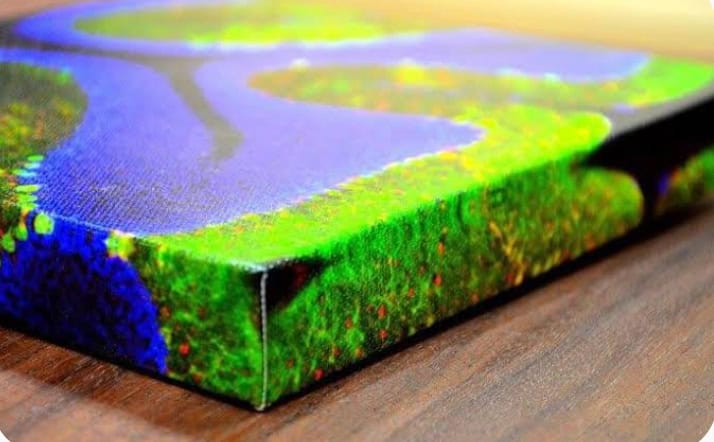
Hanging a memorable photo or favorite piece of artwork on canvas is easily one of the best ways to bring warmth and warmth into a room. Canvas doesn’t reflect harsh light the way glass does, and it gives everyday photos an instant gallery-like feel.
If you’ve ever shopped for prints online, though, you’ve probably noticed a wild difference in prices. The exact same photo printed at $20 on one site might cost $80 on another for the same dimensions.
So, what gives? What causes that huge price gap, and is a pricier canvas actually worth it?
The reality is that canvas prints aren’t created equal. Behind the final picture is a mix of fabric choices, ink types, frame materials, and craftsmanship. A bargain print might look fine the day it arrives, but fast forward two or three years: the colors fade, the fabric sags, and cheap wood frames start to warp.
What Makes a Canvas Print High Quality
If you want wall decor that stays sharp and vibrant for decades, here are the 7 things that actually separate a cheap print from a great one.
1. The Fabric: Real Cotton vs. Cheap Synthetic Blends
Every great print starts with the raw fabric (often called the substrate). Budget print shops rely heavily on 100% synthetic polyester because it’s cheap and easy to work with. While polyester can hold bright colors, it lacks that classic, textured woven feel you expect from real canvas.
Higher-end printers use heavy pure cotton or balanced poly-cotton blends. Cotton lets the ink sink deep into the fibers rather than just sitting on top. Pay attention to fabric weight, too—it’s measured in grams per square meter (GSM). You want a sturdy 350 to 400 GSM fabric. That extra weight stops the canvas from stretching out, tearing, or sagging when room temperature and humidity shift.
2. The Inks: Archival Pigment vs. Cheap Solvents
The ink used dictates whether your photo retains its color or turns into a muddy blur. Discount services usually stick with basic dye-based or solvent inks that break down fast under standard indoor light. Over time, solvent inks can cause skin tones to shift into weird shades—and they sometimes emit a faint chemical smell when you unbox them.
Top-tier shops use archival pigment inks, including UV-resistant formulations. Pigment particles bind tightly to the fabric fibers, delivering deep blacks, rich contrast, and colors that won’t fade. Under normal room lighting, a good pigment print can keep its original color accuracy for 70 to 100 years.
3. Printing Tech: Giclée vs. Standard Desktop Hardware
Even the best canvas and ink won’t save a photo if the printer itself is basic. Standard commercial printers use simple four-color systems that struggle with fine gradients, soft skin tones, and subtle shadows, which leaves you with grainy or pixelated spots.
Professional print shops use Giclée technology with 8 to 12 color ink systems. These specialized setups spray microscopic dots of ink with extreme precision. When paired with a high-resolution image file, Giclée printing produces buttery-smooth color transitions, razor-sharp lines, and realistic depth.
4. The Stretcher Bars: Kiln-Dried Solid Wood vs. Cheap Particle Board
The wooden frame hidden behind the canvas is what holds everything together. Bargain manufacturers frequently use glued particle board or Medium-Density Fiberboard (MDF). MDF is notorious for absorbing moisture from the air, causing the frame to bow and twist over time—leaving ugly wrinkles across your photo.
Quality craftsmanship requires real, solid wood like pine or spruce that has been kiln-dried. The drying process removes internal moisture so the timber won’t warp or shrink down the road. High-quality stretcher bars also feature a slightly raised outer edge, keeping the wood frame from pressing flat against the canvas fabric and leaving visible outline ridges.
5. Assembly: Careful Hand-Stretching vs. Machine Pulling
Stretching fabric over a frame takes a delicate touch. Automated factory machines apply uniform force that can easily over-stretch the corners—cracking the printed ink—or leave slack spots in the center.
Skilled craftsmen stretch canvas by hand, tweaking the tension along every edge so it sits perfectly flat. Look closely at the corners: they should have clean, neat, flat folds without bulky bunching. Neat stapling on the back and protective backing tape are clear signs of a job well done.
6. Finishing Touches: Clear Protective Coatings
An unfinished canvas is vulnerable to dust, accidental scuffs, splashes, and sunlight. Good printmakers apply an acrylic varnish or clear protective topcoat after the ink sets.
This invisible layer seals the print, blocks UV rays, and makes the surface scratch-resistant. Best of all, it allows you to gently wipe away dust or smudges with a damp microfiber cloth without ruining the ink underneath.
7. Attention to Detail & Quality Control
Ultimately, a canvas is only as good as the eyes inspecting it. Better print shops manually review image resolution before printing, check for alignment during stretching, and carefully inspect the final product before wrapping it up for shipping. That human touch makes all the difference.
The Bottom Line
A cheap print can be tempting, but shorting yourself on materials usually leads to loose fabric, faded pictures, and bent frames before you know it.
If you want wall art that looks just as vivid and sturdy ten years from now as the day you hung it, keep an eye out for kiln-dried wood, archival pigment inks, heavyweight cotton blends, and protective topcoats.
Frequently Asked Questions
Why do canvas prints have such huge price differences online?
Price differences stem from the quality of materials and construction. Budget canvas prints use cheap polyester fabric, standard solvent inks, and weak MDF (particle board) frames. Premium prints use heavy cotton-blend fabrics, long-lasting archival pigment inks, and solid kiln-dried wood frames stretched by hand.
How long does a quality canvas print last?
A high-quality canvas made with archival pigment inks and a protective UV coating can last 70 to 100 years indoors without noticeable fading. Lower-grade prints made with solvent or dye-based inks often begin fading or shifting in color within 2 to 3 years.
What is the difference between cotton and polyester canvas?
Polyester: Smooth, lightweight, and low-cost. It holds bright colors well but lacks an authentic woven texture and can sag or tear over time.
Cotton (or Poly-Cotton Blends): Heavier (350–400 GSM) and more durable. The natural fibers absorb ink deeply into the fabric, providing rich texture, natural warmth, and structural resistance to room humidity.
What is Giclée printing?
Giclée (zhee-klay) is a high-end inkjet printing method using specialized hardware with 8 to 12 distinct ink colors (compared to 4 in basic printers). It sprays microscopic ink droplets to deliver smooth gradients, razor-sharp line details, and accurate color matching.
Why do cheap canvas frames bend or warp over time?
Budget frames often use Medium-Density Fiberboard (MDF) or glued particle board, which absorbs atmospheric moisture easily. As humidity changes, MDF bows, leaving visible ripples across the canvas. Premium frames use kiln-dried solid timber (like pine or spruce), which has had all moisture removed to prevent warping.
Can I clean a canvas print if it gets dusty?
Yes—if it has a protective coating. High-quality prints feature an acrylic varnish or clear coat that seals the ink and provides scratch/water resistance. You can gently wipe the surface using a dry or slightly damp microfiber cloth without smudging the artwork.
Why is hand-stretching better than machine-stretching?
Automated machinery uses rigid, uniform tension that can over-stretch and crack the printed ink at the corners or leave loose slack in the middle. Skilled craftsmen stretch fabric by hand, adjusting tension dynamically across all four sides and creating tight, neat corner folds.