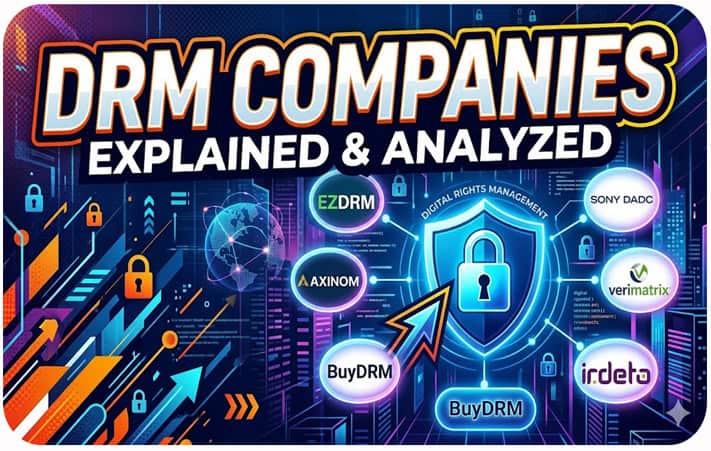
Multi DRM Companies Are Vital for Digital Media Protection: Digital content is one of the most valuable commodities in the present hyperconnected world. From blockbuster movies and live sports to educational platforms and OTT streaming services, digital media has become the core of global entertainment. Yet, as content distribution grows, so do the risks of piracy, unauthorized access, and intellectual property theft. To combat these threats, the entertainment industry increasingly relies on multi DRM companies that provide sophisticated security frameworks ensuring both content protection and seamless user experience.
Understanding the Need for Digital Rights Management (DRM)
Digital Rights Management (DRM) refers to technologies that control how digital content is used, shared, and distributed. It is the invisible guardian ensuring that videos, songs, and e- books are accessed only by authorized users under specified terms. Traditional DRM systems were once effective in limited ecosystems, but the digital landscape has evolved. With the rise of cross-platform viewing, spanning smart TVs, mobile apps, browsers, and streaming devices—content providers needed more flexible and adaptive protection methods.
That’s where multi DRM companies stepped in. They bridge the gap between diverse device ecosystems and varying DRM standards to provide unified, cross-compatible protection for digital media. In essence, multi-DRM systems make sure that content can be securely streamed across different devices without compromising performance or accessibility.
Why Traditional DRM Is No Longer Enough
In the early days of digital media, single DRM systems could manage content protection for most use cases. However, the diversity of devices and operating systems today has made that model obsolete.
If a content provider uses only one of these technologies, their content becomes inaccessible on certain devices. For instance, PlayReady may work seamlessly on Windows devices but not on iOS or Android. This fragmentation not only limits audience reach but also increases vulnerability to unauthorized access.
Multi-DRM frameworks integrate all these standards, allowing content owners to secure their media across every platform, browser, and device, without sacrificing convenience for end- users.
How Multi-DRM Systems Work
Multi-DRM technology functions as a central security hub that issues and manages licenses for multiple DRM platforms. Here’s how the process works:
1. Encryption of Content: Before distribution, video files are encrypted using advanced algorithms. This ensures that only authorized devices with valid licenses can decrypt and play them.
2. License Management: The multi-DRM service manages license requests from users. When a viewer tries to play content, the system checks device credentials and usage rights before issuing a playback license.
3. Playback Across Devices: Depending on the user’s device, the appropriate DRM technology (Widevine, PlayReady, or FairPlay) is automatically activated, allowing smooth playback without manual intervention.
4. Monitoring and Revocation: Multi-DRM systems provide real-time analytics and the ability to revoke access if any irregular activity is detected, protecting content owners from piracy and misuse.
This holistic approach ensures that media companies maintain full control of their content, even after distribution.
The Business Impact of Multi-DRM Protection
For streaming platforms, broadcasters, and OTT providers, content protection is more than a security feature, it’s a business necessity. Piracy costs the global entertainment industry billions of dollars each year. Multi-DRM systems help businesses mitigate these losses by ensuring that their premium content is available only to paying users.
Beyond security, multi-DRM integration also enhances monetization. By controlling how and where content is accessed, providers can implement flexible business models, such as rentals, pay-per-view, and subscription tiers, without worrying about unauthorized duplication.
Moreover, a secure distribution framework builds consumer trust. When viewers are confident their data and content access are protected, they’re more likely to remain loyal subscribers. For enterprises, this translates into better retention, higher revenue, and a stronger brand reputation.
Balancing Security and User Experience
The key challenge for digital media companies is maintaining a balance between robust security and effortless viewing. Overly restrictive protection can frustrate legitimate users, leading to poor engagement. Multi-DRM systems overcome this challenge by ensuring smooth playback and fast license delivery, even with complex encryption.
Adaptive streaming, low-latency playback, and consistent performance across devices make these systems indispensable for modern OTT services. Whether it’s a live sports event viewed on a smart TV or a training video on a smartphone, multi-DRM ensures that the viewer experience remains seamless.
The best solutions also integrate with Content Delivery Networks (CDNs) and video analytics platforms, giving providers insights into viewer behavior and regional performance while maintaining airtight protection.
Compliance and Regulatory Advantages
With global streaming expanding into multiple markets, regulatory compliance is another vital concern. Multi-DRM systems help content providers meet international standards for data protection and usage rights.
For instance, platforms distributing to Europe must comply with GDPR and regional copyright laws. Similarly, U.S.-based media providers must ensure adherence to the Digital Millennium Copyright Act (DMCA). Multi-DRM frameworks enable compliance through controlled encryption, key rotation, and license audits, making them an essential component of digital governance.
Innovation and Future Trends
The next evolution of DRM technology lies in combining machine learning and blockchain to enhance security transparency and threat detection. AI-driven DRM systems can identify piracy patterns in real time, while blockchain ensures verifiable proof of content ownership.
Additionally, as Virtual Reality (VR) and Augmented Reality (AR) experiences become mainstream, multi-DRM solutions will play a central role in protecting immersive media. These emerging technologies depend on secure, real-time encryption to protect proprietary assets and deliver uninterrupted viewing experiences.
Cloud-based DRM management is another growing trend. It provides scalability, global access, and reduced latency, allowing content providers to manage millions of users securely from one centralized system.
Choosing the Right Multi-DRM Partner
Selecting the right multi-DRM partner is crucial. Businesses should look for companies that offer:
● Comprehensive platform coverage (PlayReady, Widevine, FairPlay)
● Scalable infrastructure to handle peak traffic
● Cloud or hybrid deployment options
● Analytics and reporting tools for monitoring usage
● 24/7 technical support for uninterrupted service
Reliable partners also integrate easily with existing OTT infrastructures and adapt to evolving market needs without disrupting viewer experience.
Conclusion
In an era where digital content defines brand identity and consumer loyalty, securing that content is more critical than ever. Multi-DRM frameworks empower content creators and distributors to protect intellectual property, comply with regulations, and deliver exceptional streaming experiences across every device and platform.
As content consumption continues to grow, the demand for trusted, scalable, and future-ready DRM partners will only increase. doverunner offers the Best Multi-DRM Solutions for Premium Video. Seamlessly secure content with PlayReady, Widevine, and FairPlay, built for platform compatibility, adaptive scalability, and flawless playback. Book a demo today and experience the future of content protection.